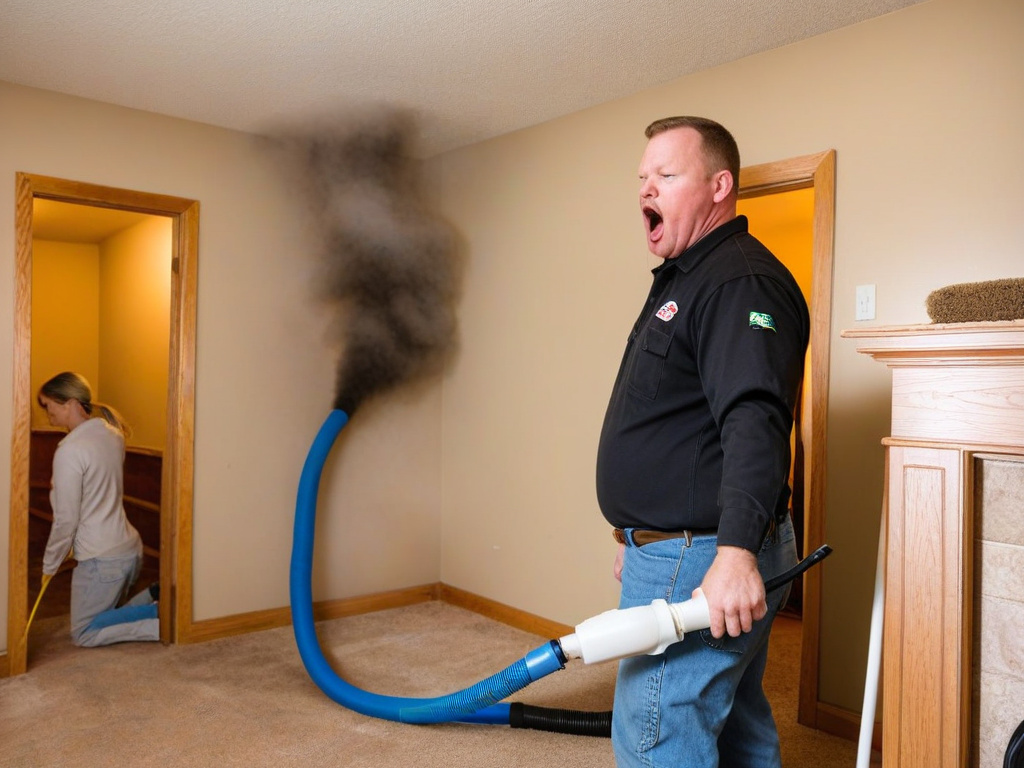
In Yankton's humid continental climate, hot summers accelerate decomposition and allow odors to migrate deep into older plaster, lath, and subflooring common in Downtown and Hilltop homes. Standard fans and sprays fail once volatile organic compounds bind to porous materials, so technicians rely on hydroxyl generators, vapor-phase deodorants, and negative-air machines to break molecular bonds rather than mask smells. Edge cases include properties near Gavins Point Dam where higher ambient moisture slows drying and extends treatment windows by several days.
Code requirements in Yankton County emphasize source removal before any sealing step; applying encapsulants over remaining residue violates health standards and invites recontamination. Crews document every layer peeled back, test with PID meters for residual amines, and only then apply thermal fogging or ozone in controlled cycles. Homeowners in nearby Sioux Falls or Mitchell sometimes attempt DIY enzyme cleaners first, which often drive odors further into HVAC returns and create larger cross-contamination zones once summer humidity spikes.
After unattended death events, blood-borne pathogens and tissue breakdown products can remain active in carpet padding and drywall for weeks. Technicians isolate HVAC systems early to prevent distribution through ductwork, then remove and dispose of affected materials under Yankton County waste protocols. Final clearance includes surface ATP testing and sensory verification by a second technician to confirm no residual odor returns when the home is closed up overnight.
Technician insight
In Yankton, the thing that catches most people out with Odor Removal & Deodorization is how quickly hot summer humidity drives odors into the plaster and lathe of pre-1950 homes in Downtown and Hilltop; once that happens you cannot simply fog the surface or the smell returns the first time the house sits closed for a weekend.
Hilltop Residence After Unattended Death
Odors had migrated from the bedroom into the central hallway and HVAC return of a 1920s home. We found saturated carpet pad and drywall behind the baseboards. After removing the affected layers we ran hydroxyl units for 48 hours and applied encapsulant to the subfloor. The family was able to reoccupy without residual odor even during the next humid spell.
Odor Removal & Deodorization Services We Offer
✓Decomposition Odor Neutralization
Breaks down organic odor molecules at the source using vapor-phase technology and targeted extraction in affected rooms.
✓Porous Material Treatment
Removes and treats subfloors, drywall, and insulation where odors have penetrated older Yankton housing stock.
✓HVAC System Deodorization
Cleans and treats ductwork and returns to stop odors from recirculating through homes in humid summer conditions.
✓Trauma Scene Air Scrubbing
Deploys HEPA and activated-carbon filtration to capture airborne particulates and odor compounds after biohazard events.
✓Surface Encapsulation
Applies EPA-registered sealants only after source removal to prevent odor re-release from remaining structural elements.
How it works
- 1
Initial Assessment
Technician documents visible contamination, measures humidity levels, and maps odor migration through the structure.
- 2
Source Removal and Containment
Affected porous materials are removed and bagged; negative pressure zones prevent spread to unaffected rooms.
- 3
Deodorization Application
Hydroxyl or ozone equipment runs in sequenced cycles while vapor deodorants treat remaining surfaces.
- 4
Verification and Clearance
Air quality meters and overnight sensory checks confirm no return of odors before reassembly.
Pricing
Cost depends on square footage affected, number of porous materials involved, and whether HVAC cleaning is required.