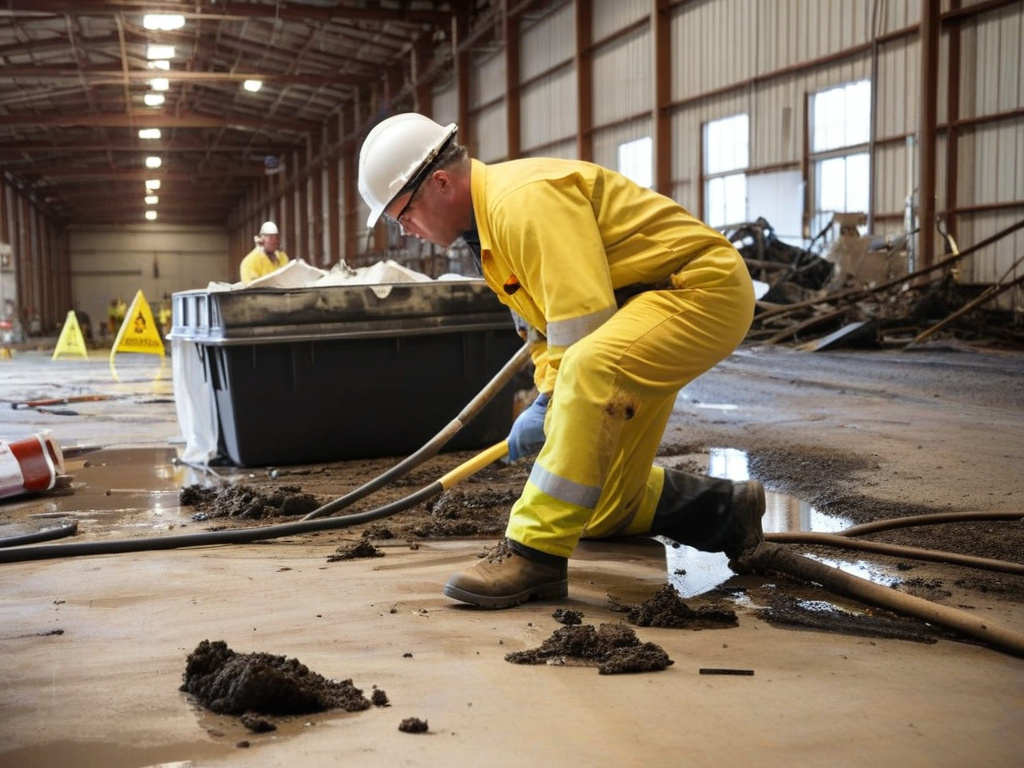
Industrial accidents in Yankton often involve machinery failures or chemical releases in older buildings around Downtown and Hilltop where concrete floors and limited ventilation allow contaminants to migrate into subfloors and wall cavities. Hot summer temperatures accelerate vapor release from solvents and blood-borne pathogens, requiring negative air machines and HEPA filtration that must run longer than in drier climates. Crews must also account for proximity to Lewis and Clark Lake and Gavins Point Dam, where runoff rules from the Army Corps of Engineers can affect disposal routes.
Work in Yankton County frequently occurs in metal fabrication shops and grain-handling facilities that use older hydraulic systems prone to leaks mixing with organic matter. These mixtures create stubborn residues that standard cleaners cannot lift without risking damage to steel beams or electrical conduits common in buildings from the mid-20th century. Technicians test surfaces with ATP meters before and after treatment because South Dakota does not mandate specific clearance standards for many industrial biohazards.
Transporting waste from Yankton sites to approved facilities in Sioux Falls or Mitchell adds time and cost when loads contain both chemical and biological components. Crews stage equipment at the Yankton shop to reach calls within thirty minutes, then establish containment before any material leaves the property. Documentation of every step protects property owners when insurance adjusters review claims for incidents near the Yankton County Historical Society buildings or other historic structures.
Technician insight
In Yankton the thing that catches most people out with Industrial Accident Cleanup is how quickly a hydraulic oil and blood mixture soaks into the old cracked concrete floors common in Hilltop warehouses during our humid summers; once it reaches the rebar you have to break out sections rather than just scrub the surface.
Hydraulic Press Incident at Downtown Fabrication Shop
A worker suffered a severe laceration when a press failed, spreading blood and hydraulic fluid across a 400-square-foot production area. We found the mixture had wicked into expansion joints and under adjacent equipment. Containment was erected, affected concrete was removed in sections, and the remaining surfaces were treated and tested before the shop reopened the next day.
Industrial Accident Cleanup Services We Offer
✓Chemical Spill Response
Neutralize and remove industrial solvents, oils, and acids from factory floors and equipment while preventing migration into nearby soil or stormwater systems.
✓Machinery Accident Decontamination
Clean blood, tissue, and fluids from manufacturing equipment and surrounding work areas after presses, conveyors, or forklifts cause injury.
✓Industrial Trauma Scene Cleanup
Restore production floors and break rooms after serious workplace injuries by removing biohazards and disinfecting high-touch surfaces.
✓Hazardous Material Containment
Erect barriers and negative-pressure zones around active spill sites in warehouses to protect workers and prevent cross-contamination to adjacent spaces.
✓Post-Incident Waste Disposal
Package, label, and transport contaminated materials from Yankton industrial sites to permitted disposal facilities in Sioux Falls or Mitchell.
How it works
- 1
Initial Assessment
Technicians arrive, review the incident details, and identify all affected surfaces, materials, and potential migration paths inside the facility.
- 2
Containment Setup
Plastic sheeting, air scrubbers, and floor dams isolate the affected zone to stop vapors or liquids from reaching clean areas.
- 3
Removal and Cleaning
Absorbents, disinfectants, and mechanical methods extract residues from concrete, metal, and porous materials while monitoring air quality.
- 4
Verification and Clearance
ATP and swab testing confirm surfaces meet safe levels before barriers come down and normal operations resume.
Pricing
Cost depends on the volume of material, square footage affected, and whether chemical or biological components require separate handling.