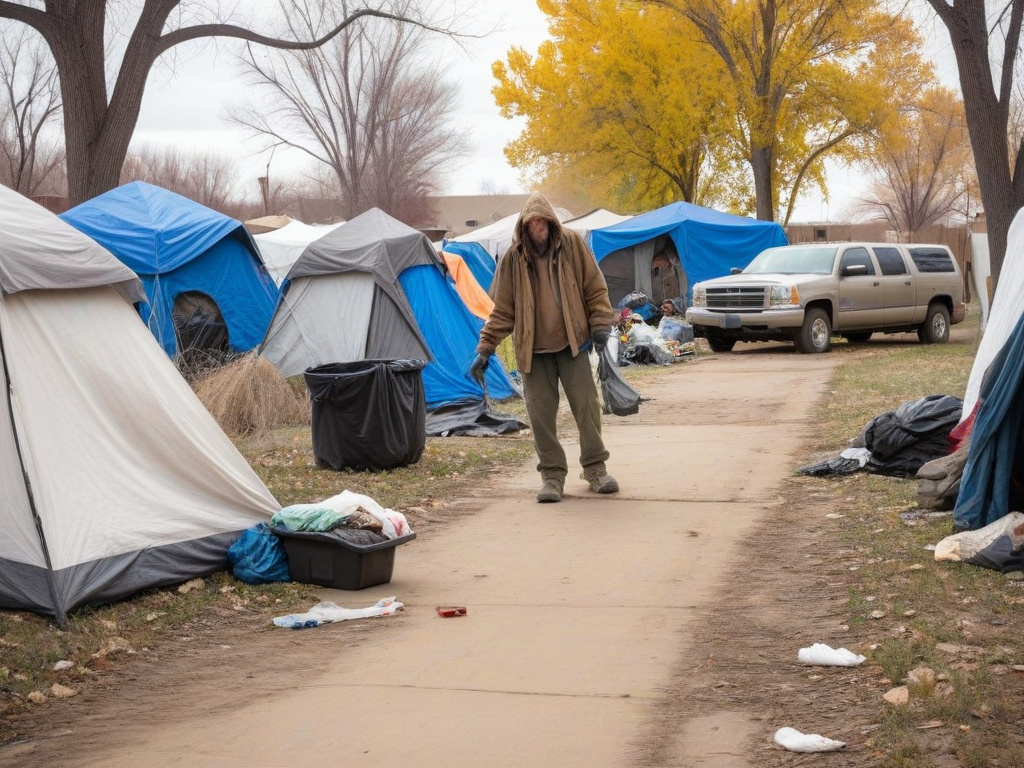
Yankton's humid continental climate with hot summers accelerates bacterial growth and odor in encampment sites, especially along the Missouri River near Gavins Point Dam and Lewis and Clark Lake. Crews must account for rapid decomposition in shaded riverbank terrain where moisture lingers and soil stays saturated. Older housing stock in Downtown and Hilltop neighborhoods often means adjacent alleys and vacant lots collect layered waste that seeps into foundations or crawl spaces during heavy rains.
Sharps, human waste and discarded needles create puncture and pathogen risks that standard trash crews cannot handle. In Yankton County, state and local health codes require documented removal and licensed disposal rather than simple hauling. Crews wear full PPE, use HEPA vacuums and apply hospital-grade disinfectants rated for bloodborne pathogens, then verify clearance with ATP surface testing before any structure is reoccupied.
Edge cases appear after floods or heat waves when encampments shift from river edges into residential yards or behind the Yankton County Historical Society buildings. Contaminated soil must be excavated to a set depth and replaced; runoff can carry pathogens into storm drains that feed the lake. Work stops only after county environmental health signs off on the site.
Coordination with Yankton police and public works prevents re-encampment the same week, while nearby Sioux Falls and Mitchell crews sometimes assist on larger multi-day jobs when volume exceeds local capacity.
Technician insight
In Yankton the thing that catches most people out with Homeless Encampment Cleanup is how quickly summer humidity near Gavins Point Dam turns layered waste into soil contamination that migrates into older Downtown foundations during the next rain.
Hilltop Alley Encampment After Heat Wave
Waste and needles had accumulated behind vacant buildings in Hilltop. Crews found saturated soil reaching crawl-space vents. They excavated the top layer, treated the remaining ground, and verified clearance before heavy rains returned.
Homeless Encampment Cleanup Services We Offer
✓Needle and Sharps Removal
Safe collection and certified disposal of hypodermic needles and broken glass from soil and debris in Yankton encampments.
✓Human Waste and Feces Remediation
Removal and neutralization of accumulated waste with EPA-approved agents to restore soil and prevent groundwater contamination near the lake.
✓Biohazard Debris Hauling
Licensed transport of contaminated tents, clothing and personal items to approved facilities outside Yankton County.
✓Soil and Surface Disinfection
Deep cleaning of affected ground and structures in Hilltop and Downtown locations using hospital-grade disinfectants after waste removal.
✓Odor Elimination Treatment
Application of industrial odor neutralizers and ozone treatment to eliminate lingering smells in humid summer conditions.
How it works
- 1
Site Assessment
Technicians inspect the encampment location, identify biohazard types and note proximity to Lewis and Clark Lake or residential foundations.
- 2
Containment Setup
Barriers and negative air machines isolate the area to prevent spread into nearby Downtown alleys or Hilltop yards.
- 3
Removal and Disposal
Sharps, waste and debris are collected, bagged and transported to licensed facilities while soil samples are taken if needed.
- 4
Disinfection and Verification
Surfaces receive targeted treatment followed by ATP testing and final walkthrough with property owner or county officials.
Pricing
Costs depend on site size, depth of contamination and access near river terrain; 24/7 dispatch provides on-site assessment.