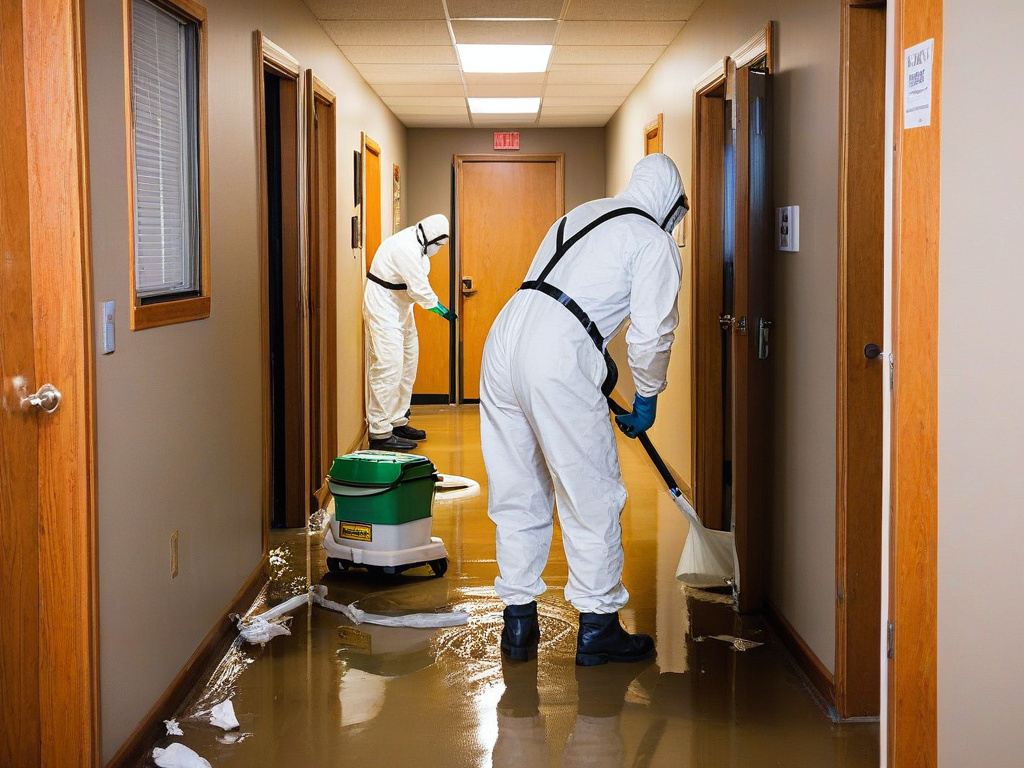
Yankton commercial buildings, especially older brick and wood-frame structures in Downtown and Hilltop, often feature porous floors and limited HVAC access that trap biohazards after an incident. Hot summer humidity speeds bacterial growth and odor migration through shared walls, requiring technicians to isolate HVAC zones early and use negative air machines before any removal begins. Gavins Point Dam and Lewis and Clark Lake humidity patterns can push moisture into basements of county offices and retail spaces near the river, complicating drying after fluid events.
Workplace incidents in Yankton County frequently involve bloodborne exposure on concrete or tile common in older industrial sites near the historical society district. Technicians must follow OSHA bloodborne pathogen standards while accounting for the county's limited commercial waste transport options, which means all regulated medical waste is staged on-site until licensed haulers from Sioux Falls arrive. Failure to map hidden voids in 1920s-era Hilltop storefronts can leave residue that reactivates during the next humid spell.
Commercial clients in Mitchell and Sioux Falls corridors often request after-hours work to avoid business interruption, so crews stage equipment at the Yankton base and roll out with pre-stocked PPE and absorbents sized for typical retail square footage. Seasonal heat demands extra hydration protocols for crews wearing full suits inside non-air-conditioned warehouses along the riverfront.
Documentation for insurance and OSHA reporting must reference exact room dimensions and material types found in Yankton's mixed-age commercial stock, since generic templates miss the wood-lath walls still present in many Hilltop offices.
Technician insight
In Yankton, the thing that catches most people out with Commercial/Workplace Biohazard Cleanup is how hot summer humidity drives fluids deeper into the old wood subfloors and plaster in Downtown and Hilltop buildings; once it reaches the lath, you have to open walls you would never touch in drier climates west of Mitchell.
Retail Stockroom Incident
A Yankton retail stockroom near the river experienced a prolonged unattended event during peak summer heat. Fluids had wicked into the concrete slab and migrated under shelving units. Crews isolated the HVAC, removed saturated base materials, and treated the slab with enzymatic cleaners before restoring the space for inspection the next day.
Commercial/Workplace Biohazard Cleanup Services We Offer
✓Workplace Blood Spill Remediation
Removes and disinfects blood and bodily fluids from retail floors, offices, and warehouses while documenting chain of custody for Yankton County health requirements.
✓Chemical Exposure Cleanup
Neutralizes and disposes of industrial or cleaning-product spills in commercial settings, protecting concrete and HVAC systems common in Downtown Yankton buildings.
✓Trauma Scene Restoration
Restores offices and retail spaces after unattended incidents, focusing on odor removal from older wood and plaster in Hilltop properties.
✓Infectious Waste Removal
Packages and transports regulated medical waste from clinics and schools to approved disposal routes serving Yankton County.
✓Post-Incident HVAC Decontamination
Cleans ducts and coils after biohazard events to prevent cross-contamination in multi-tenant buildings near Lewis and Clark Lake.
How it works
- 1
Initial Assessment
Technician arrives within hours, maps affected zones in the specific Yankton commercial layout, and identifies porous materials and HVAC paths.
- 2
Containment Setup
Establishes negative pressure barriers and seals off shared walls typical in Downtown and Hilltop structures before any removal.
- 3
Removal and Disposal
Extracts contaminated materials and stages regulated waste for licensed transport out of Yankton County.
- 4
Sanitization and Verification
Applies hospital-grade disinfectants, then performs ATP testing to confirm surfaces meet commercial re-occupancy standards.
Pricing
Upfront written quote after on-site assessment; final cost depends on square footage, material porosity, and waste volume.